


By Jill Pease
People with HIV are living longer than ever, but they also face a higher risk of developing cardiovascular disease and often experience it earlier than their peers. A new University of Florida study will examine how overlapping biological, behavioral and social factors may compound health risks for people with HIV.
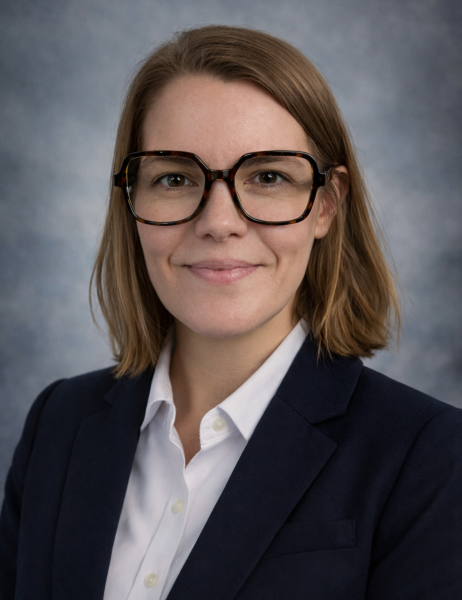
Natalie Chichetto, Ph.D., M.S.W., an assistant professor in the UF College of Public Health and Health Professions Department of Epidemiology, leads the National Heart, Lung, and Blood Institute funded study that seeks to identify actionable interventions to improve heart health among people living with HIV.
People with HIV have up to a 50% higher burden of cardiovascular disease than the general population. The increased risk is not fully explained by medication side effects or the disease not being well controlled. Chichetto’s new study aims to understand what other factors may be playing a role.
She used her background in social work to inform the study design, which draws on syndemic theory, a biosocial framework that explores how co-occurring medical conditions and social factors interact to worsen health outcomes.
“Syndemic theory is not new, but it’s getting a lot of attention because we’re realizing how translational it is across different health outcomes in different at-risk communities,” Chichetto said.
The theoretical approach goes deeper than explaining that two conditions, such as depression and anxiety, may commonly occur together, she said. Syndemic theory explores how those conditions interact to increase one’s risk for a particular health outcome.
“With this theory becoming more recognized, as a scientific community we are thinking more deeply about how we capture social determinants of health,” Chichetto said. “It’s not just whether or not someone has insurance coverage. It’s things like, ‘Do you live in a neighborhood with a park you feel safe walking to?’ That is a social driver of health.”
The team will analyze data from the National Institutes of Health’s All of Us Research Program. The dataset includes information on more than 100 social factors that influence health among about 7,000 people living with HIV. Researchers will use those data to identify patterns of health characteristics, known as phenotypes, and better understand structural barriers to care, Chichetto said.
She provided a hypothetical example:
“Say there is a phenotype associated with untreated hypertension, transportation issues and older age,” Chichetto said. “Then we can start thinking about what kind of interventions work for people who can’t always get to their appointments easily, don’t have transportation or are having a hard time getting to care without some sort of network to help them. Mail-in prescriptions, mobile clinics or something like Uber Health may help reduce those transportation burdens.”
The new study will blend traditional epidemiological methods with AI-driven analysis to identify complex relationships among the more than 100 social factors.
“The idea is to hopefully be able to capture that nuance with AI, but bring it back to the standard epidemiology methods that we all know and love and are tried and true, and develop an AI-enhanced epidemiology,” Chichetto said.
In addition to Chichetto, the research team includes Department of Epidemiology faculty with expertise in a range of fields, including Mattia Prosperi, Ph.D., FAMIA, FACMI, a professor (artificial intelligence); Stephen Kimmel, M.D., a dean’s professor and chair (cardiovascular health); Linda B. Cottler, Ph.D., FACE, FACTS, a professor (community-based participatory research); and Drew Westmoreland, Ph.D., an assistant professor (social and behavioral epidemiology). The team will also solicit feedback from a community advisory panel and up to 75 stakeholders, including people living with HIV, caregivers and healthcare providers specializing in HIV and cardiovascular care.
“This is a huge opportunity to continue to think about how we incorporate community feedback and how we can get study results back to the people who are the ultimate providers of their own health,” Chichetto said.